
FacebookTwitterLinkedInWhatsAppEmail
Sejarah Bandara Ewer-Asmat
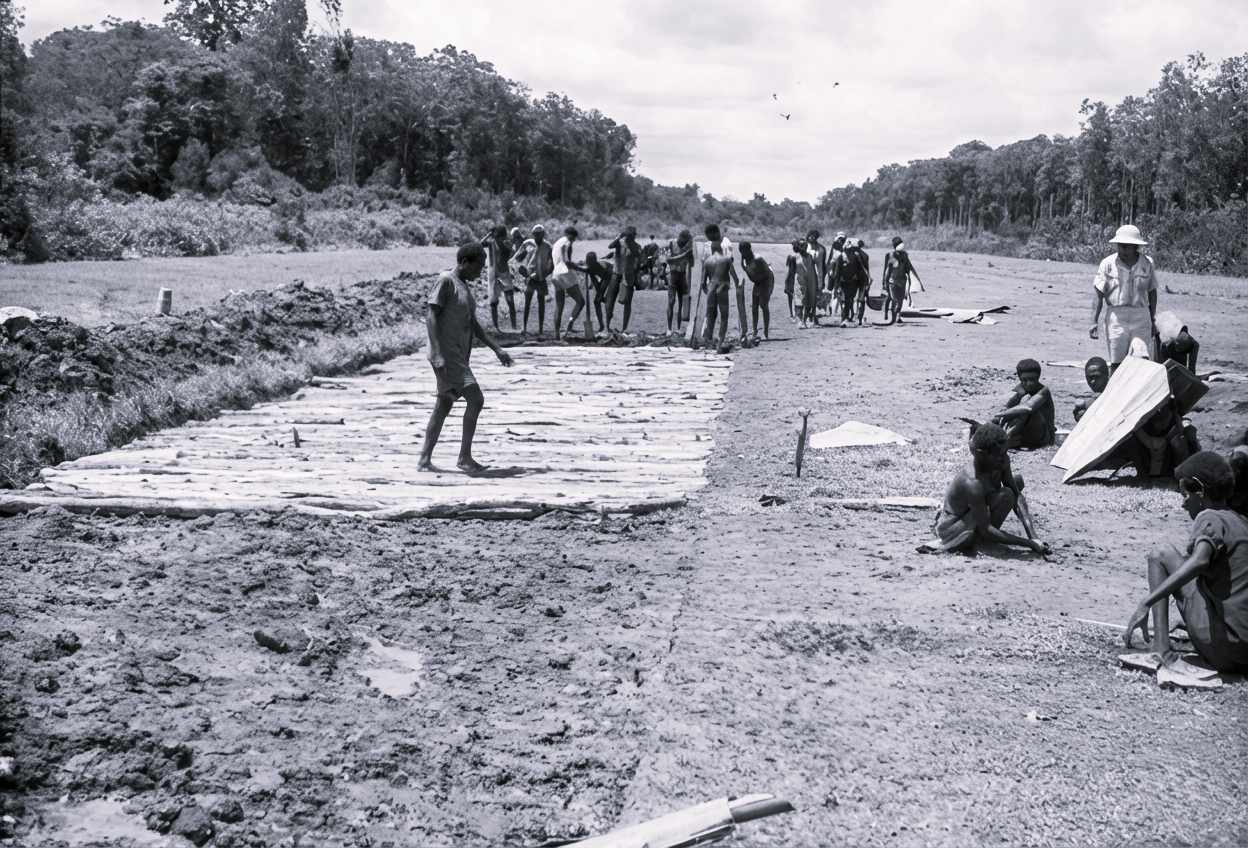
Landasan Udara Ewer: Gerbang Baru Menuju Asmat Disusun oleh Andreas Wahyu – Asmat Archives Pada awal tahun 1950-an, Pastor Zegwaard MSC memulai karya misi Katolik di wilayah Asmat. Beberapa tahun kemudian, tepatnya pada akhir 1958, hadir pula kelompok misionaris OSC dari Amerika. Seluruh aktivitas misi ketika itu bergantung pada transportasi air, mulai dari perahu dayung hingga perahu bermotor. Secara administratif, Asmat masih menjadi bagian dari Keuskupan Merauke yang dipimpin Uskup Mgr. Herman Tillemans MSC. Dalam perjalanan waktu, para misionaris mulai menyadari perlunya membangun sebuah landasan pacu yang lebih dekat ke Agats, pusat kegiatan misi, untuk mendukung pelayanan dan mobilitas. Ewer dipilih sebagai lokasi pembangunan landasan udara karena letaknya strategis—hanya sekitar 1,5 jam perjalanan dengan perahu motor dari pusat kota Agats. Jarak ini jauh lebih dekat dibandingkan dengan Pirimapun, lokasi landasan udara lama yang beroperasi sejak 1960. Dari Agats ke Pirimapun diperlukan waktu hingga dua belas jam perjalanan. Sayangnya, pada tahun 1972, landasan udara lama itu harus ditutup setelah terkikis dan akhirnya ditelan laut. Selain lokasinya yang lebih dekat, Ewer juga memiliki keunggulan lain: tanah liat yang padat dan kokoh hanya berada 90 cm di bawah lapisan lumpur lunak. Kondisi ini dianggap ideal untuk dijadikan dasar landasan pacu. Pada tahun sebelumnya, Br. Joseph De Louw OSC mengoordinasikan pembukaan hutan seluas 300 x 600 meter sebagai persiapan. Penduduk setempat kemudian membawa tanah liat dari Sungai Pek dengan tangan mereka sendiri, menimbunnya setinggi satu meter agar lebih tinggi dari permukaan air pasang. Br. Joseph mengenang pengalamannya: “Saya membagi rencana landasan pacu menjadi seratus bagian, masing-masing sepanjang 5 meter. Setiap bagian dikerjakan dengan sistem kontrak. Saya memperkirakan berapa hari kerja yang dibutuhkan untuk mengisi satu bagian, lalu menetapkan upah harian yang layak. Kontrak hanya saya buat dengan satu orang—pria atau wanita—yang bertanggung jawab atas bagian itu, termasuk mengatur jumlah asisten dan waktu pengerjaan.” Sementara itu, Pastor David Gallus OSC, yang bertugas di Ewer, memimpin pemeliharaan landasan pacu. Ia kemudian berhasil meningkatkan kualitasnya dengan melapisi seluruh landasan menggunakan “tikar” dari batang bakau sepanjang 4 meter yang disusun ala corduroy road. Setelah ditutup dengan tanah liat, lapisan ini membuat landasan cukup kuat untuk didarati pesawat berbobot lebih besar. Selain di Ewer, misi Katolik dan Protestan juga terus membangun beberapa landasan udara baru di lokasi lain. Pastor Gallus OSC bahkan berperan sebagai penghubung Keuskupan Agats dengan AMA (Associated Mission Aviation), lembaga penerbangan misi Katolik yang berdiri sejak 1959. Pada pertengahan 1968, AMA menjadi badan hukum yang menaungi berbagai tarekat: Fransiskan (OFM), Krosier (OSC), Misionaris Hati Kudus (MSC), dan Agustinian (OSA). AMA melayani salah satu wilayah penerbangan paling menantang di dunia. Pegunungan tinggi yang membentang dari tenggara ke barat laut sepanjang 1.500 mil membelah Pulau Nugini, menghadirkan “pintu masuk” sempit menuju dataran rendah. Sebelum adanya bantuan GPS, pilot Katolik (AMA), Protestan (MAF), Advent, maupun maskapai misi lainnya kerap menghadapi risiko besar, dengan rata-rata satu hingga dua kecelakaan fatal setiap tahunnya. Landasan udara Ewer menjadi titik masuk penting bagi para misionaris OSC berikutnya ke Agats. Pada 13 September 1964, Bruder Tom Luke Benoit OSC menerbangkan pesawat Cessna 185 dari Sentani ke Ewer dalam waktu 1 jam 55 menit. Ini Adalah pendaratan pertama di Ewer. Dalam suratnya kepada Pastor Provinsial OSC di Amerika, ia menuliskan: “Saya lampirkan peta bersama surat ini agar Anda bisa memahami rute-rute penerbangan kami dan lokasi bandara yang ada. Landasan di Ewer adalah yang terbaik yang pernah saya lihat. Kali ini saya tidak mengalami masalah tenggelam. Pastor Miller bahkan sempat menancapkan tongkat besar sedalam satu meter untuk mengikat pesawat—begitu menembus kerak tanah, seolah tidak ada dasarnya. Landasan itu panjangnya 500 meter dengan lebar 8 meter. Sejauh ini, landasan ini telah membuktikan nilainya. Ada wacana untuk memperkerasnya dengan kayu ulin, tetapi hal itu masih sekadar rencana.” Sumber:New Guinea Letter No.21 My Fields Has Been the World. The Memoirs of Brother Joseph DeLouw, OSC. Pada 13 September 1964, Bruder Tom Luke Benoit OSC menerbangkan pesawat Cessna 185 dari Sentani ke Ewer dalam waktu 1 jam 55 menit.
Asmat Drums No. 30 Fall 1974
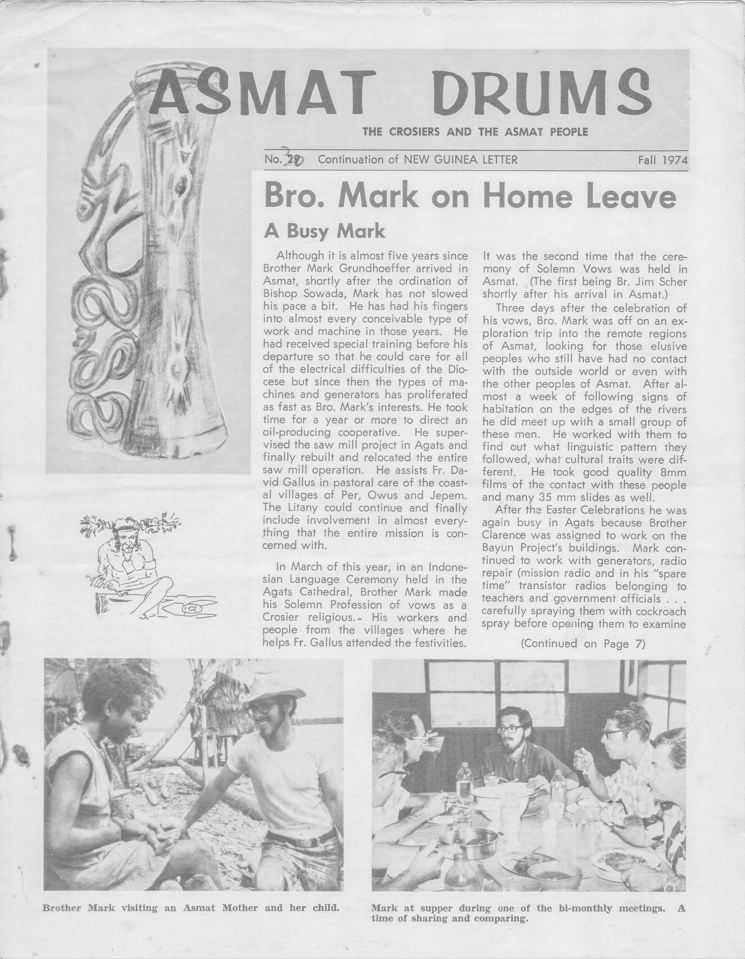
ASMAT DRUMS; The Crosiers and The Asmat PeopleContinuation of New Guinea LetterNo. 30 Fall 1974Published by Crosier Community, Agats (Rev. E. Greiwe), and the Diocese of Agats (Most Rev. A. Sowada)Editor: Rev. F. Trenkenschuh, OSC.
Asmat Drums No. 29 Spring 1974
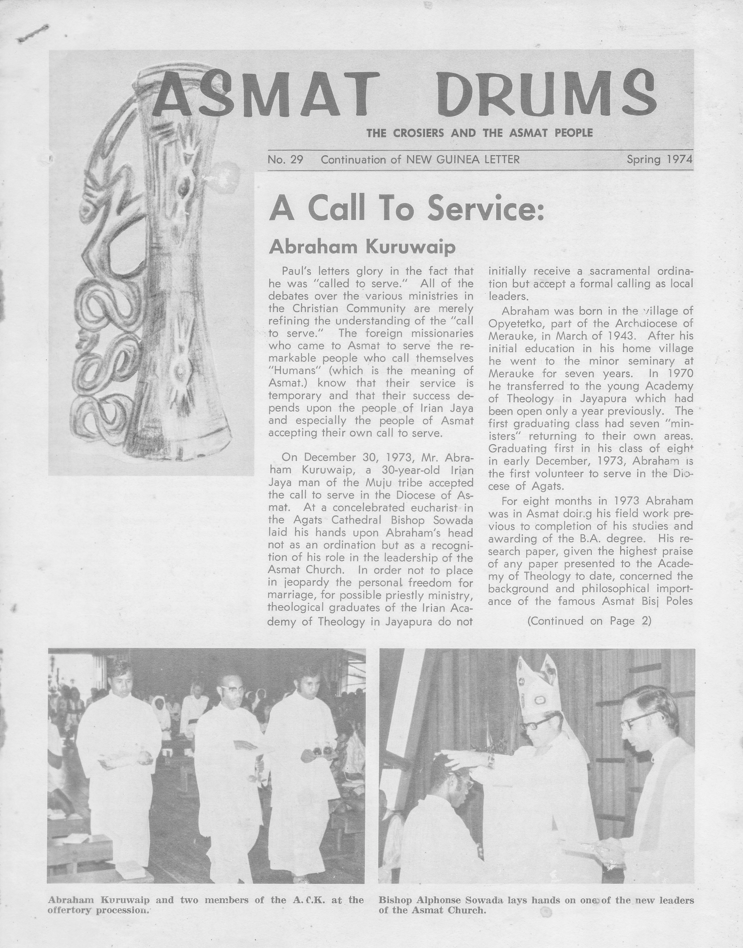
ASMAT DRUMS; The Crosiers and The Asmat PeopleContinuation of New Guinea LetterNo. 29 Spring 1974Published by Crosier Community, Agats (Rev. E. Greiwe), and the Diocese of Agats (Most Rev. A. Sowada)Editor: Rev. F. Trenkenschuh, OSC.
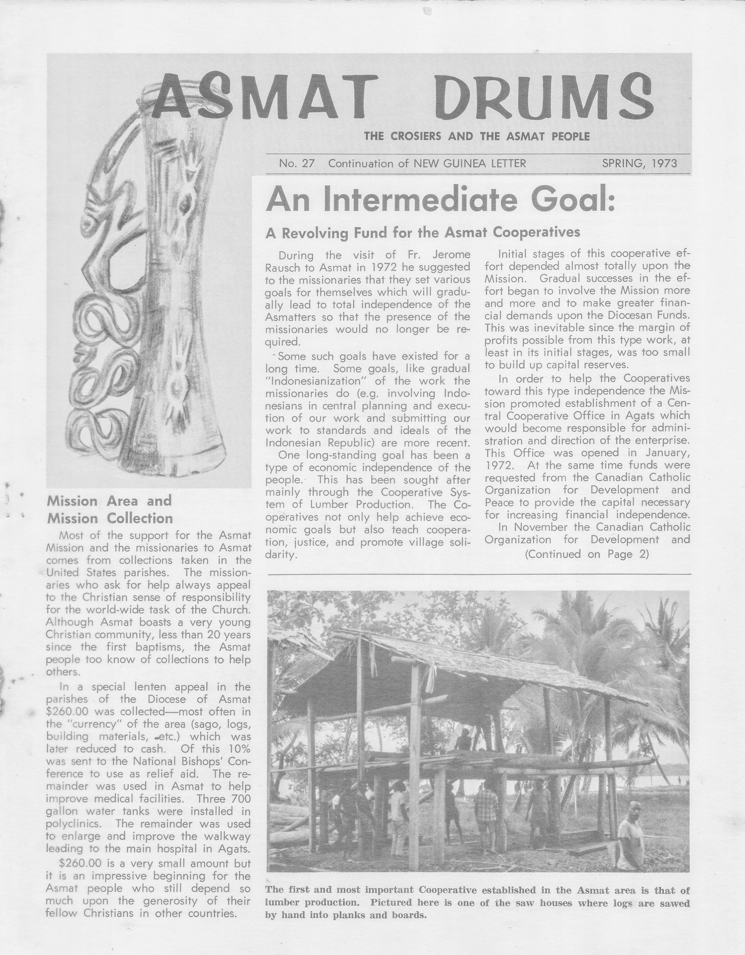
ASMAT DRUMS No. 27 Spring 1973
ASMAT DRUMS; The Crosiers and The Asmat PeopleContinuation of New Guinea LetterNo. 27 Spring 1973Published by Crosier Community, Agats (Rev. E. Greiwe), and the Diocese of Agats (Most Rev. A. Sowada)Editor: Rev. F. Trenkenschuh, OSC.
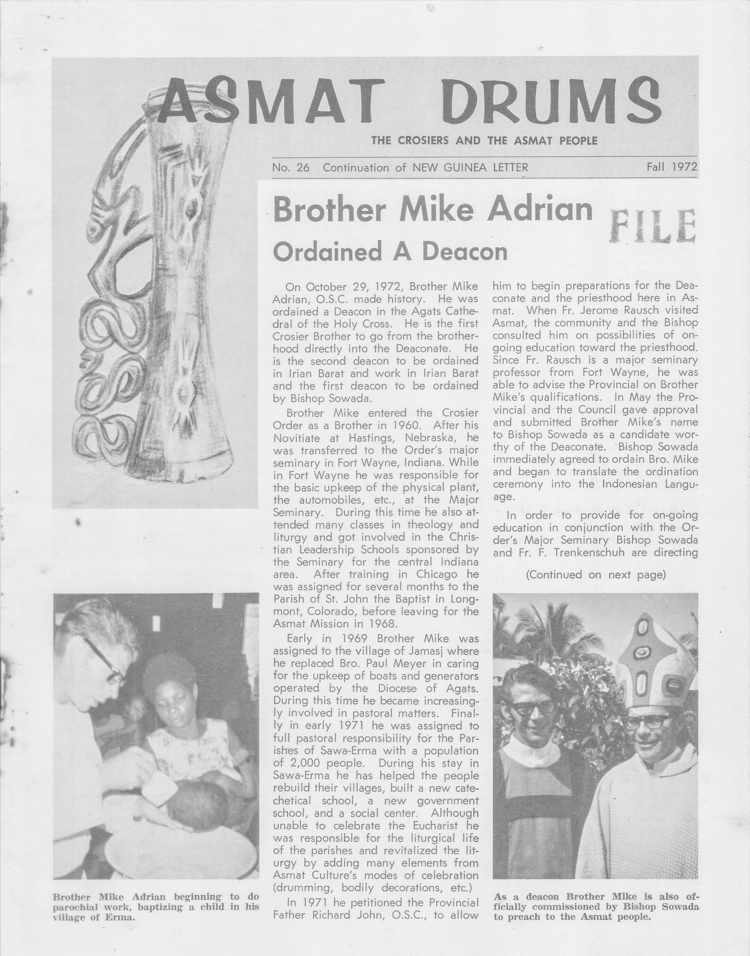
ASMAT DRUMS No. 26 Fall 1972
ASMAT DRUMS; The Crosiers and The Asmat People No. 26 Continuation of New Guinea Letter Fall 1972 Published by Crosier Community, Agats (Rev. E. Greiwe), and the Diocese of Agats (Most Rev. A. Sowada) Editor: Rev. F. Trenkenschuh, OSC.
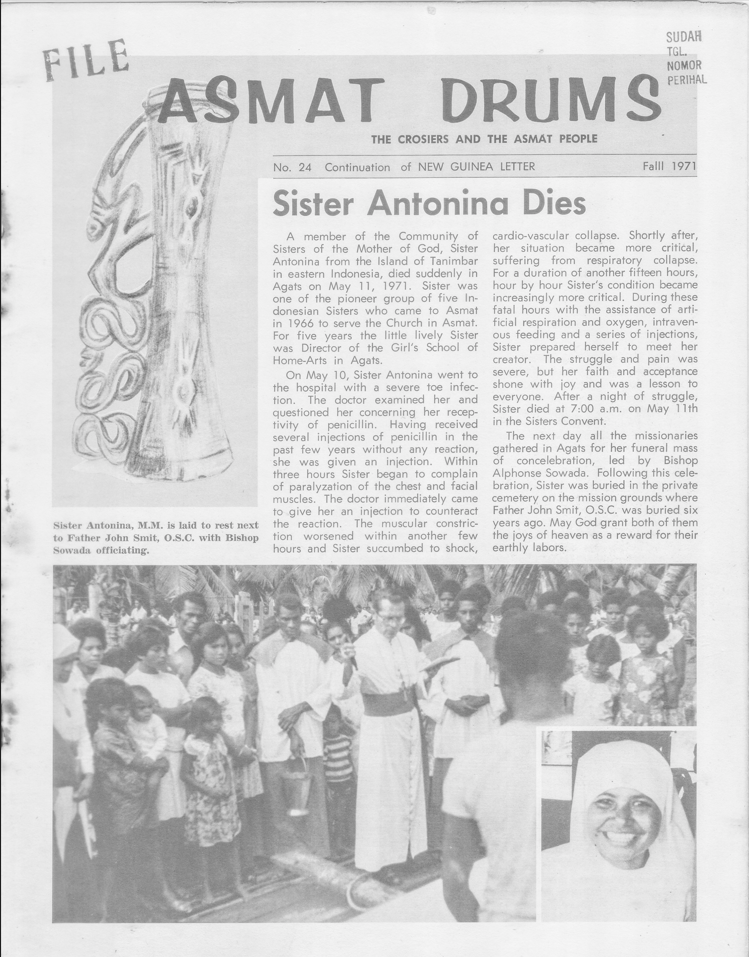
ASMAT DRUMS No. 24 Fall 1971
ASMAT DRUMS; The Crosiers and The Asmat People.Continuation of New Guinea LetterNo. 24 Fall 1971Editor: Father Ed Greiwe, OSC
An Asmat Sketch Book No. 5, Part A: Perspectives on Development in Asmat
Acknowledgment During the preparation, fieldwork, data analysis, and writing of this study I was assisted on many occasions by a number of individuals and organizations. Often, they made special efforts or put in long hours on my behalf, without even asking for thanks. I would like to express my appreciation to all of them. Without their aid this research would not have been possible. Above all, special thanks go to my wife, Kathleen Van Arsdale. Her enthusiasm, hard work, cheerful assistance, and long years of encouragement were the keystones to whatever success I have experienced. My parents, Marjorie and Wayne Van Arsdale, provided continual encouragement and assistance throughout. The contributions of Prof. Gottfried O. Lang were given freely, enthusiastically, and in a manner which significantly influenced my entire course of study at the University of Colorado. His aid as both advisor and friend has been immeasurable. The contributions of Professors David Greene, Paul Shankman, and W. Richards Smith were also extremely important, especially in the analysis of the data and its manner of presentation. Prof. Robert Hackenberg pro- vided valuable advice and also aided me through my affiliation with the Institute of Behavioral Science’s Research Training Program in Culture Change. The fellowship which I received through this program under the auspices of the National Institute of Mental Health, made much of my research in Irian Jaya possible. Sister of Mary Mediatrix, stationed in Asmat, helped me in a variety of ways, as did the mission staff. Pilots and staff of Associated Mission Aviation (A.M.A.) not only assisted in flights from Sentani to Ewer, they provided housing and good food as well. The assistance and flexibility shown by members of the local Indonesian government office in Agats went a long way to ensuring that my fieldwork was completed successfully. In particular, 1 would like to thank Camat Joseph B. Omberep. Other persons and organizations to whom I am indebted include Dr. R. Reed Johnson, M.D., for his kind medical advice and donation of medical supplies; the staff of the University of Colorado Computing Center and its affiliate in the Institute of Behavioral Science; the staff of the Bernice P. Bishop Museum in Honolulu, Hawaii; the Phoek Koek Tjoeng family of Agats; and those persons who tirelessly and enthusiastically typed the text—Judy Fukuhara, Pam Lipton, Shirlee Mueller, and Jean Umbreit. Special thanks go to Pam and Bill Beuthel for the encouragement they provided, and their efforts typing much of the text and drawing the four village maps. I dedicate this study to my Asmat friends. Their contributions of information were at all times complemented by enthusiasm, humor, and friendship. The people of the villages of Ewer, Owus, Syuru, Yepem, and Agats were a pleasure to work with. I would like to sin- Henrikus Aman, gle out those young men who so ably assisted me: Beda Ar, Kasmirus Bacim, Kiriakus Bui, Caspar Cawi po, Paskalis Dipakam, Johannes Konam, and Cornelius Owespits. Peter W. Van Arsdale July 1, 1975 A Series On The Asmat People Edited: Frank A. Trenkenschuh, O.S.C.Publisher: The Asmat Museum Of Culture and Progress Year: 1978 Read Full PDF Here
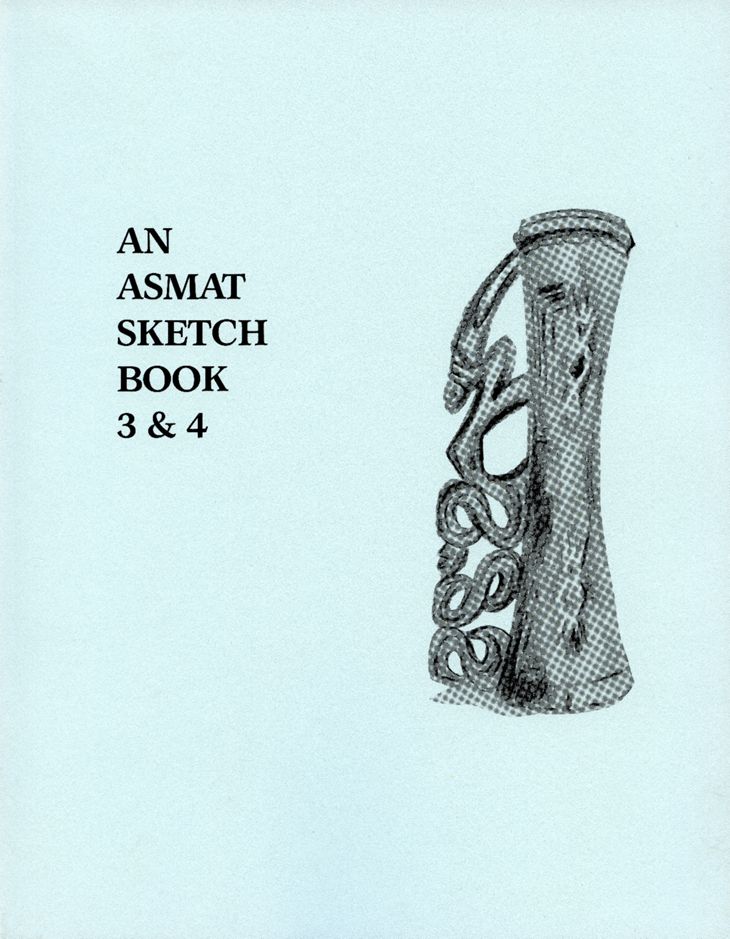
An Asmat Sketch Book No. 3 & 4
Preface to 1984 Edition of An Asmat Sketch Book 3 and 4 In 1982 we reprinted An Asmat Sketch Book 1 and 2 as one volume, while considering them two books. That seemed to work well. Now it is time to reprint 3 and 4. Because both books are rather short, we are also reprinting them as two books in one volume. No changes in content or ideas were made. However, some grammatical corrections and more uniformity in layout were attempted. Typing styles were standardized. We hope the new edition will be easier to read. Marcus B. Fleischhacker, OSC Mission Director Hastings, NE. February 15, 1984. A Series On The Asmat People Edited: Frank A. Trenkenschuh, O.S.C.Publisher: The Asmat Museum Of Culture and Progress Year: 1984 Read Full PDF Here
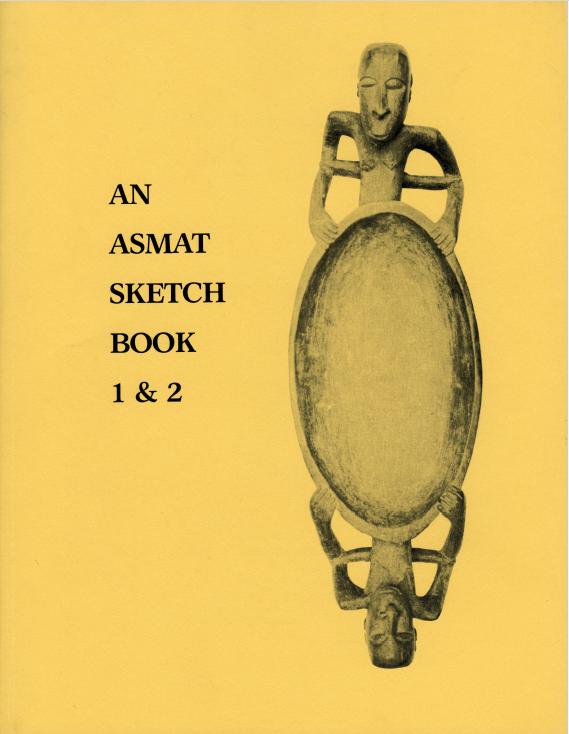
An Asmat Sketch Book 1&2
Preface to 1982 Edition of An Asmat Sketch Book No. 1 and 2 In the introduction to the 1972 Edition of An Asmat Sketch Book No. 1, Fr. Trenkenschuh noted that the response to the publication of the books was surprising. There was a demand for more than originally printed. The response has continued so that now a third printing is required. The original issues were done in Hastings, Nebraska, by mimeograph machine. The demand for the books has justified using the services of a professional printing company. The first Asmat Sketch Book was published in 1970. It was published in two volumes. By late 1971 there was a need and a desire for another book. This prompted a change in the original design. The original two volumes were now to be called An Asmat Sketch Book No. 1 and An Asmat Sketch Book No. 2. All subsequent books would be numbered accordingly. (cf. Preface to 1972 Edition of An Asmat Sketch Book No. 1.) In this 1982 edition, No. 1 and No. 2 are bound together but still considered separate books. In other words, we are now able to offer Books 1 and 2 in one volume. No changes in the content or ideas of the original editions were made. However, grammatical corrections were attempted as well as uniformity in printing styles. Diagrams and drawings were redone, using the original information and artistic conceptions. We will leave further improvements to a fourth edition, should it become necessary! Marcus B. Fleischhacker, O.S.C. Mission Director Hastings, Nebraska. September 1, 1982 A Series On The Asmat People Edited: Frank A. Trenkenschuh, O.S.C.Publisher: The Asmat Museum Of Culture and Progress Year: 1982 Read Full PDF Here
